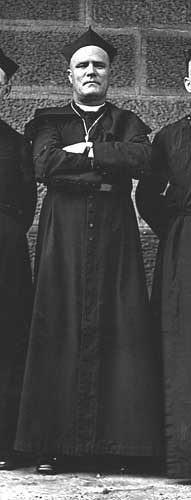
Though he died in 1972, "Father John" remains one of the fabled priests of the Anglican Communion. During his incumbency of 38 years, certain powerful elements within the diocese took measures to obstruct the life and outreach of the parish by removing first its right to the compensation moneys for the railway resumptions, and later its use of the Parish Hall which they planned to demolish. Says L.C. Rodd (Hope's biographer), "During the years when Christ Church was fighting hard for its very existence, the Catholic Faith was at its most triumphant, both in personal practice and in service to those in need. The Mission services in Paddy's Markets, the crowded church for the Mission services on Friday nights and for the Holy Hour on Saturday nights . . ." Ministry to the poor and homeless was a feature of parish life, the quaintly named "Boys' welfare Bureau" got shelter and clothing for thousands of boys and youths during the 1930s. Tranby Aboriginal Cooperative was founded in an old house given for the purpose by Father John. As a leading exponent of Christian Socialism, he had gained the nickname of "Red Jack"; some people found it an amusing irony when he was awarded an MBE in 1956 for his services to the needy. In later years Hope began public services of healing. From this pioneering at Christ Church, the Ministry of Healing has become a lively movement within the Anglican Church today. Fr Hope introduced the Order of St Luke to the Australian scene from North America.
No one whoever heard him in the pulpit could forget his gravelly voice and compassionate, no-nonsense message, nor could those who witnessed it forget the spiritual force he radiated.
Project Canterbury